Char kway teow rice noodles
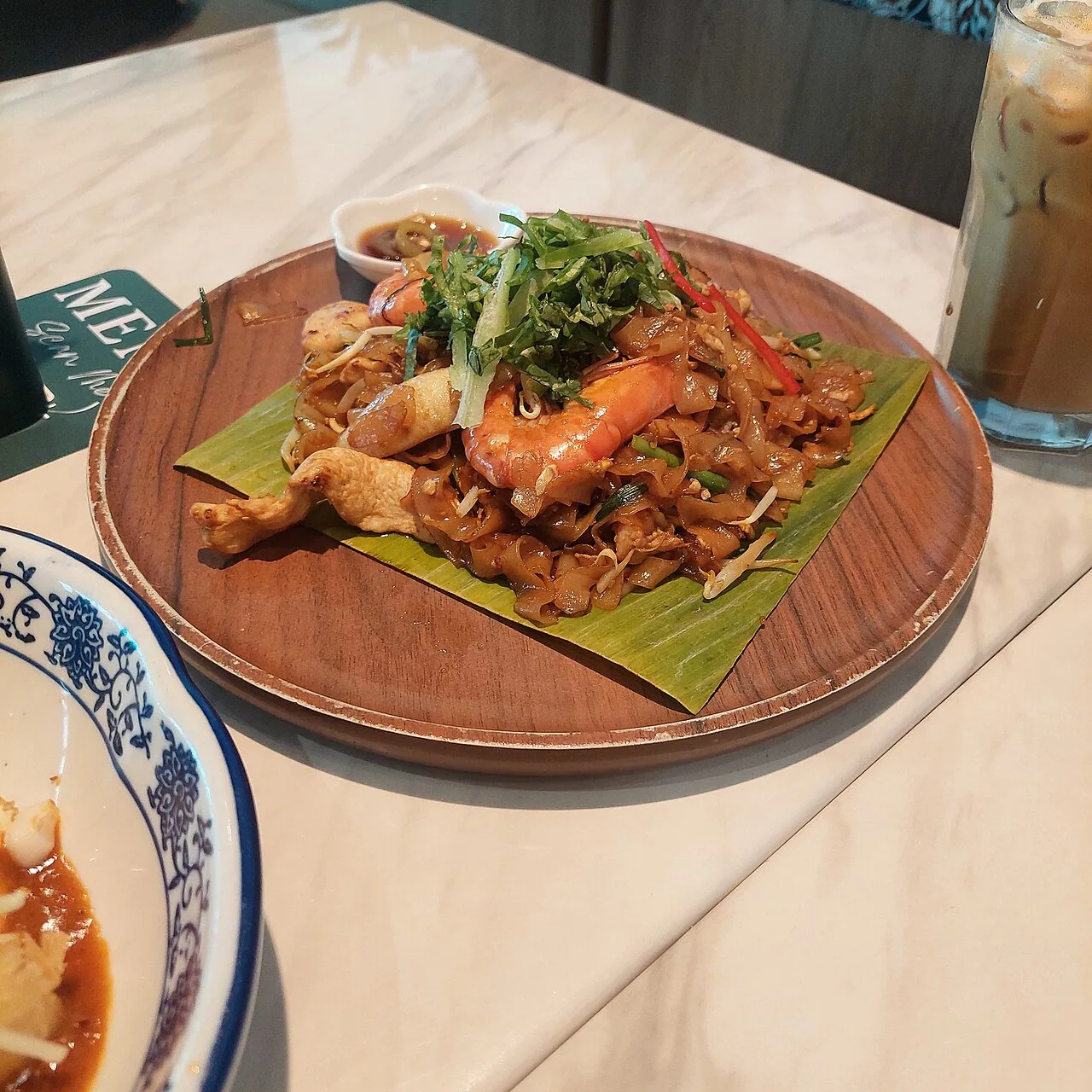
Rice noodles with shrimp, Chinese sausage, fish cake and egg.
Approximate total time: 25 min3 servingsMalaysia and Singapore
Ingredients
For 3 servings.
1 cup = 240 ml; 1 tablespoon = 15 ml; 1 teaspoon = 5 ml. Use metric quantities where stated. Times and servings are indicative.
- 500 g fresh wide rice noodles
- 2 tbsp lard or vegetable oil, plus 2 tbsp vegetable oil
- 10 small peeled shrimp and 2 minced garlic cloves
- 1 Chinese lap cheong sausage, thinly sliced
- 1 piece fried fish cake, about 5 cm long, sliced
- 20 Chinese garlic chive stems, cut into lengths
- 2 1/2 cups mung bean sprouts
- 2 beaten eggs
- 5 tsp dark soy and 4 tsp light soy sauce
- 2 tsp oyster sauce and 4 tsp kecap manis
Step-by-step method
- Mix the four sauces. Warm noodles according to the packet until pliable and gently separate them.
- Heat 1 tbsp oil in a wide pan; cook shrimp until opaque and remove.
- Fry sausage and fish cake for about 1 minute and remove. Add the remaining tablespoon of oil and make an omelette, breaking it into pieces in the pan.
- Remove egg and fry sprouts for 1 minute; set aside with the other ingredients.
- Melt lard in the hot pan, add garlic and immediately follow with noodles; fold gently.
- Return reserved ingredients, add chives and sauces and toss with brief pauses so the noodles colour.
- Serve once everything is hot and the sauce evenly distributed.
✦ Kitchen tip
Cold, rigid rice noodles break easily; soften them before separating.
A home-cooking adaptation. Timings are approximate and depend on ingredients and equipment. The photo may show different garnishes or presentation.
Recipe references
Ingredients and techniques referenced from the sources below; wording and structure adapted for Becas à Mesa.